How far is worth delivering in party rentals
How to calculate the radius that still turns a profit, why a R$50 fee loses the sale, and how to charge for delivery without looking expensive.

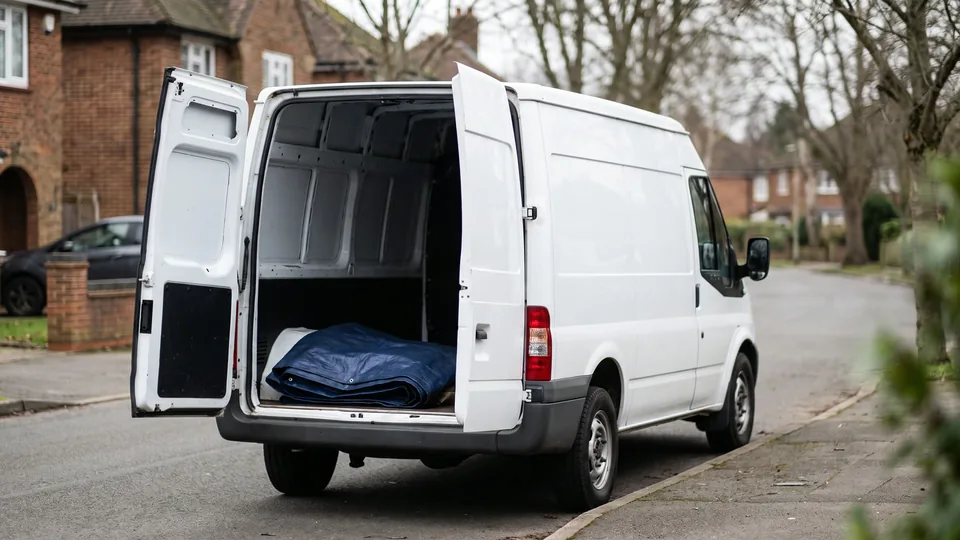
In short Delivery is the biggest cost pain in party rentals: the reference is around R$2.30 per kilometre driven, and a R$50 fee is already enough to lose the sale. The radius worth serving is not the one the vehicle reaches, but the one where travel still fits the margin — which, on a R$500 party carrying R$200 of cost, ends up shorter than most people assume.
Figures measured by L2 Mídias
- Travel cost reference in Brazilian party rentals
- Around R$2.30 per kilometre driven; delivery charges from R$150 to R$2,000 depending on distance; a R$50 fee is already enough to lose the sale Jul 2025 to Jul 2026
- Targeting radius practised in niche campaigns
- From 1 km to 40-50 km around the location, set by city or by radius, excluding lower-income areas when the product is premium Jul 2025 to Jul 2026
- Effect of distance on ticket for high-value equipment
- A mechanical bull renting at around R$1,000 in its own city was booked at R$3,800 in a municipality 60 km away Jul 2025 to Jul 2026
Delivery is the line that decides most sales in party rentals, and the one that least appears on a quote. Not because it is large — because it is enough to break the tie against the competitor down the road.
Figures below come from the Brazilian market, in reais.
The number that surprises people
A R$50 fee is already enough to lose the sale.
It is disproportionate to the amount, and it makes sense from the buyer’s side: the family compares two inflatable castle quotes and one has an extra line. They are not assessing whether the unit is better — they are seeing that one costs more.
On the operator’s side, the cost reference is around R$2.30 per kilometre driven, with delivery charges from R$150 to R$2,000 depending on distance.
The calculation that defines the radius
On a R$500 party, the cost structure is known: attendant ~R$100, fuel ~R$50, cleaning ~R$50 — around R$200, leaving R$300.
The fuel in that calculation corresponds to a short trip. Every extra kilometre consumes the profit:
| Distance (round trip) | Approximate cost | Left from R$300 |
|---|---|---|
| 20 km | ~R$46 | ~R$254 |
| 50 km | ~R$115 | ~R$185 |
| 100 km | ~R$230 | ~R$70 |
| 150 km | ~R$345 | negative |
The point at which the line turns negative is your real radius — and it is shorter than the vehicle’s range, which is the criterion most people use.
Worth noting the table is for a R$500 party. The higher the ticket, the larger the radius that sustains itself: a mechanical bull renting at around R$1,000 in its own city was booked at R$3,800 in a town 60 km away. At that level, travel is a fraction of the value.
The three ways to charge, and what each does
Build it into the price. The nearby client ends up paying for someone else’s distance, and you look expensive exactly where competition is heaviest. Works poorly for operations with a wide radius.
Charge separately, case by case. Exposes the fee that loses sales, and turns every negotiation into an argument about R$50.
Tier it by band. Same price within a defined radius, declared increment beyond it. The nearby client does not overpay, the distant one knows the cost before negotiating, and you stop negotiating delivery on every quote.
The third is what appears in better-organised operations, and the only one that resolves the objection before it exists.
What this changes in advertising
The campaign radius should be the radius that yields margin — not the one the vehicle reaches.
In niche campaigns, targeting runs from 1 km to 40-50 km, set by city or by radius. Advertising beyond the viable radius has a double cost: it burns budget bringing messages that will die at the delivery fee, and it burns the handling time that should be answering people nearby — given that response speed is what moves closing most in this sector.
There is also the income adjustment: when the product is premium — white luxury inflatables renting between R$1,100 and R$1,800 — campaigns typically exclude regions where the ticket does not sustain itself, rather than spending reach on an audience that will compare against informal operators.
“I found it cheaper in my own town”
That objection is delivery, spoken aloud. The client compares your price with travel against a neighbour’s without it — and you do not win that comparison on price.
Two honest exits:
- Change what is being compared, showing what is included: attendant, maintenance, contract, insurance. Same reasoning as how to price party rentals without joining a price war.
- Accept that beyond the radius, sales only close at high ticket — and concentrate advertising where they close at any ticket.
The dishonest exit is absorbing the delivery to avoid losing the sale. It closes the booking and consumes the margin that sustains the business.
Radius checklist
- Do I know, in reais, the average travel cost of my parties?
- Have I calculated at what distance delivery consumes the party’s profit?
- Is my ad radius the one that yields margin, or the one the vehicle reaches?
- Do I have declared delivery bands, or negotiate case by case?
- Does the quote show delivery before the negotiation starts?
- Do I have a different price for high ticket at longer distance?
- Does the campaign exclude regions where my ticket does not sustain itself?
The second line changes everything and almost nobody has it. The full per-party cost maths is in how much it costs to start a bounce house rental business.
It is also worth crossing the radius with your calendar: serving far away occupies a whole day of a crew that could have run two nearby parties. The capacity maths is in how many parties your weekend can hold.
Want these numbers applied to your rental business?
The data in this article comes from real operations we work with in Brazil. Leave your details and we will look at where yours is losing bookings.
Frequently asked questions
Should I build delivery into the price or charge it separately?
Building it in pushes away the nearby client, who ends up paying for someone else's distance. Charging separately exposes a fee that, from R$50 upwards, already loses sales. The approach that works best is tiering: same price within a defined radius, declared increment beyond it. The close client does not overpay and the distant one knows the cost before negotiating.
How do I answer 'I found it cheaper in my own town'?
That objection is almost always about delivery, not the unit — the client compares your price with travel against a neighbour's without it. You cannot win that comparison on price. You can change it, by showing what is included: attendant, maintenance, contract. Or accept that beyond the radius, sales only close at high ticket.
What radius should I use in ad targeting?
The one that still yields margin, not the one the vehicle reaches. In niche campaigns it ranges from 1 km to 40-50 km, and the correct definition comes from a calculation: at what distance does travel cost consume the party's profit. Advertising beyond that generates messages that die at the delivery fee, burning budget and handling time.
Is it ever worth serving far away?
It is when the ticket supports it. A mechanical bull renting at around R$1,000 in its own city was booked at R$3,800 in a town 60 km away — at that level, travel is a fraction of the value. The practical rule: the higher the ticket, the larger the radius that sustains itself. For entry-level products, the radius is short.